
Augmented reality and adult entertainment have been quietly crossing paths for well over a decade. While most people only started hearing about AR after modern headsets hit the headlines, experimental projects were already popping up around 2010. These early attempts were rough, creative, and sometimes a little chaotic. But they laid the groundwork for what would eventually become a full category of immersive adult tech.
Long before sleek mixed-reality headsets and polished WebXR experiences, developers were experimenting with webcams, printed markers, and basic 3D overlays. It wasn’t perfect, but it was enough to spark curiosity and push the idea that adult content could exist beyond the flat screen.
2010: The First PC Webcam AR Porn
One of the earliest public demonstrations came from Pink Visual, who showcased a webcam-based AR concept at the CES Show in January 2010. Using simple marker tracking and browser-based rendering, the system placed virtual performers into a user’s camera feed so they appeared inside the room when viewed on screen.
At the time, this felt futuristic, even if the technology was closer to a tech demo than a finished product. Compared to the era’s hype around 3D televisions and motion controls, the concept of blending adult content into real environments felt surprisingly ahead of its time.
Like many experimental projects from that period, the idea generated buzz but didn’t immediately evolve into a large platform. Still, it proved something important: AR adult content was technically possible, and audiences were curious.
2010: The Beginning of CGI Animation AR Porn
As 2010 continued, developers began experimenting with more stylized approaches that looked closer to modern AR overlays. Instead of simply placing video into a scene, some projects attempted to build full 3D representations using CGI techniques.
One notable concept involved a promotional project called XXL Girl, created for a Russian men’s magazine anniversary issue. Readers received a printed insert that acted as a visual marker. When viewed through a webcam, the marker triggered a fully animated dancer rendered in 3D space.
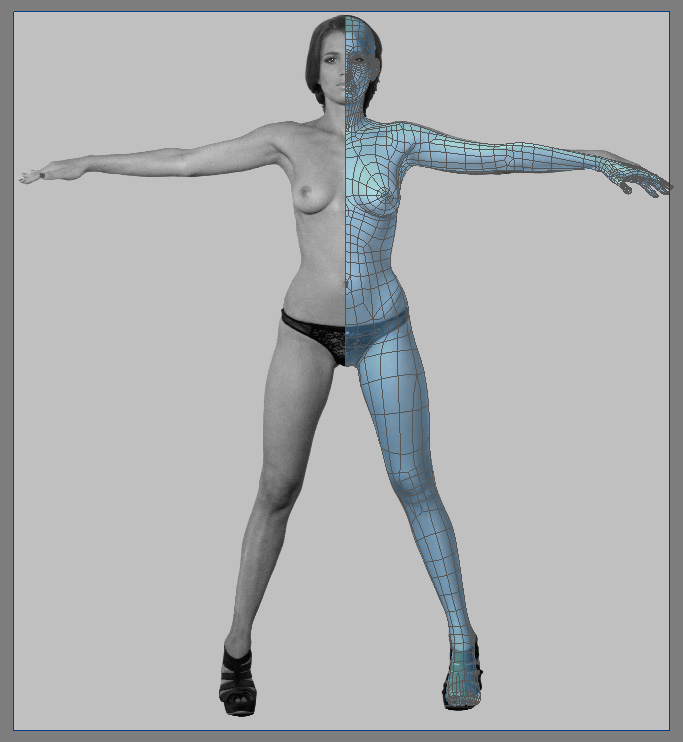
To build the model, the team captured reference photography from multiple angles during a real magazine shoot, then reconstructed the performer using wireframe modeling and texture mapping. For the time, this was an ambitious blend of print media and interactive digital content.
The experiment hinted at something bigger: traditional media could extend beyond the page, turning static imagery into interactive experiences.

2010-2013: Playboy Dabbles with AR Porn
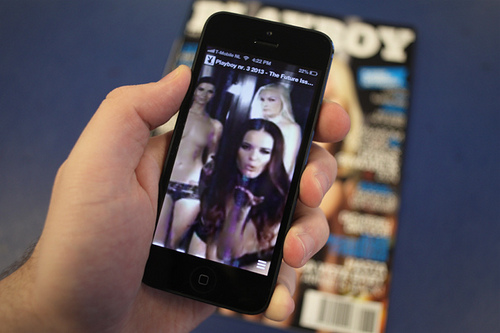
Early AR experiments eventually caught the attention of mainstream adult brands. Around 2010, a Spanish creative developer produced a proof-of-concept using a cover from as an AR marker, placing a virtual performer directly on top of the printed artwork when viewed through a webcam.
While this specific demo wasn’t an official release, it demonstrated how naturally augmented reality could pair with magazine content (something publishers were actively exploring) as print readership began shifting toward digital formats.
By 2013, Playboy moved from experimentation into real marketing campaigns by partnering with Layar, one of the earliest mobile AR platforms. Using Layar’s image-recognition system, readers could scan select magazine pages or outdoor advertisements with a smartphone to unlock exclusive interactive layers, including videos, animations, and behind-the-scenes content.
The collaboration wasn’t just a novelty. It represented one of the first times a major adult publisher tested AR as a bridge between physical media and digital engagement. Bus shelter campaigns and interactive magazine spreads showed how AR could extend traditional formats rather than replace them, giving readers an extra reason to keep their phones nearby.
This era marked a subtle but important shift: AR adult content was no longer just experimental tech demos. It was beginning to overlap with real-world marketing and audience interaction.
2013: Google Glass Porn
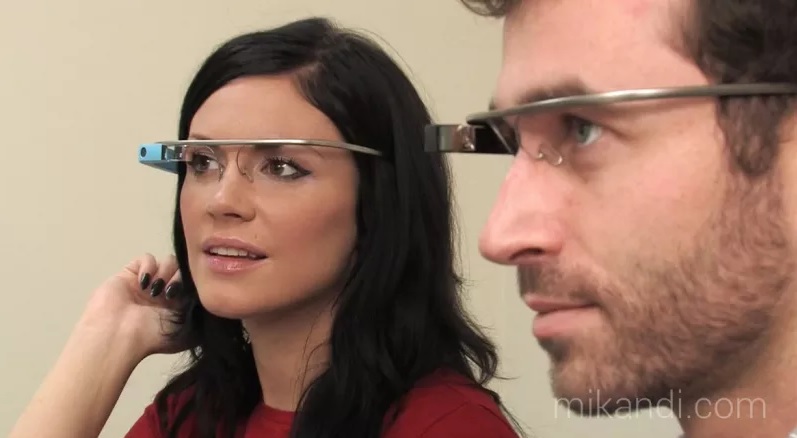
When wearable tech started gaining attention, the adult industry quickly tested the possibilities. In 2013, MiKandi produced a short experimental video for Google’s early smart-glasses platform, featuring James Deen and the 2011 XBIZ Female Performer of the Year, Andy San Dimas.
The idea was simple but intriguing: capture content from a wearable perspective and explore how hands-free viewing might change immersion. Unfortunately, adult apps were quickly restricted on the platform, and the device itself never reached mainstream adoption.
Even so, the experiment showed that adult creators were already thinking beyond phones and desktops, toward fully wearable experiences.
2018: ARPorn.com Demo V1
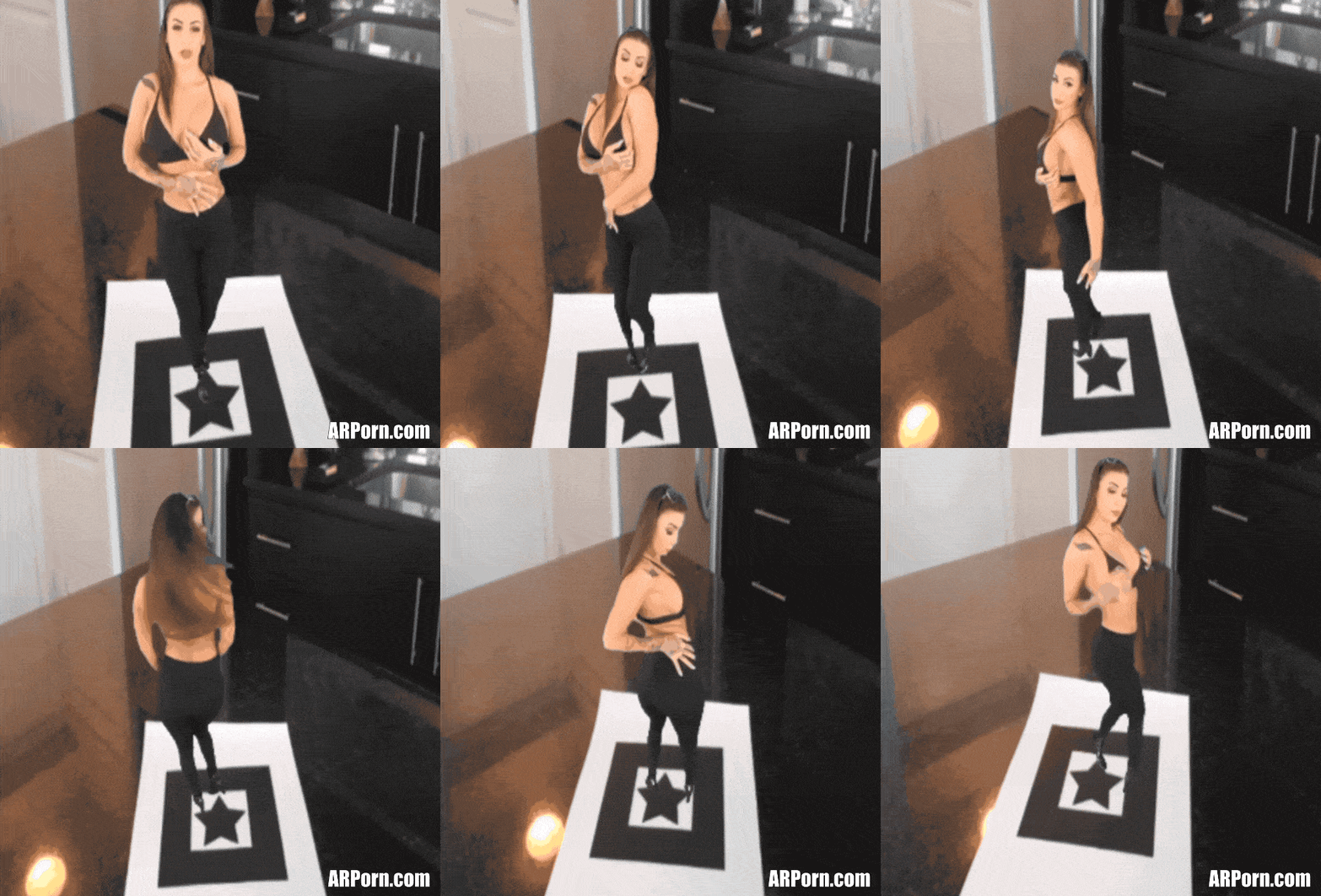
In 2018, ARPorn.com was owned and operated by us, the creators of ARFreaks. During that period, we partnered with BaDoinkVR & RealVR to release a groundbreaking augmented reality demo featuring porn star Susy Gala. What made this demo special was that it featured a real stereoscopic 3D performer captured on video rather than a computer-generated likeness, something that had not yet been done using 180° SBS at the time.
The demo worked with Android smartphones and mobile VR headsets like Google Cardboard or Samsung Gear VR. Using AR.js technology with chroma key green screen removal and a printed AR marker, viewers could watch Susy Gala dancing in their real environment. It used real stereoscopic 180° video in a side-by-side format rather than a computer-generated model, making it the first implementations of 180° SBS passthrough augmented reality, a format that has since become the standard. Since that demo was produced, ARPorn.com has been acquired by new owners and is no longer operated by us.
2018: 3D HoloGirlfriend
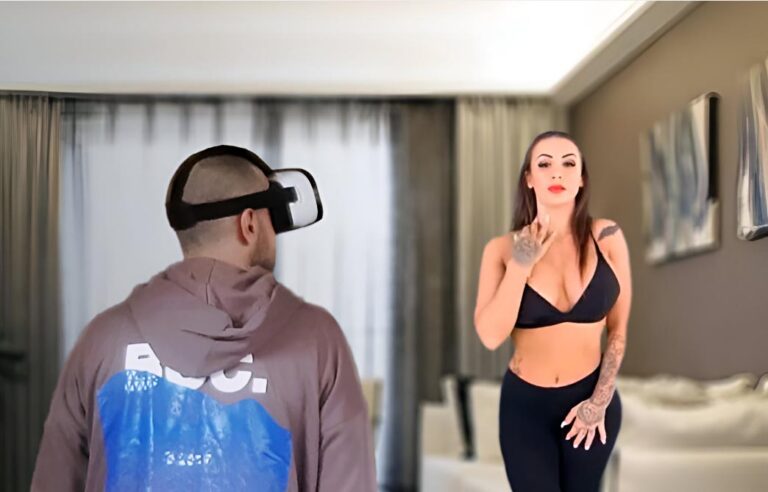
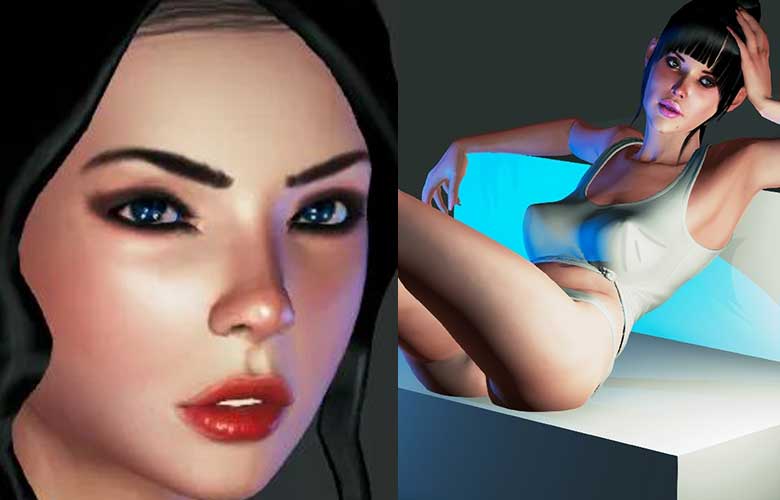
As dedicated AR headsets like the Microsoft HoloLens began appearing, developers started building content specifically for spatial computing rather than adapting smartphone workflows. Early platforms experimented with persistent holographic characters designed to exist within the user’s environment.
Some projects even explored personality-driven interactions inspired by science fiction portrayals of virtual companions, including the AI relationship themes seen in Blade Runner 2049.
This era introduced the idea that AR adult content might eventually blend entertainment with conversational AI and interactive behavior.
2019-2022: Naughty America – Mobile AR to Quest Headsets
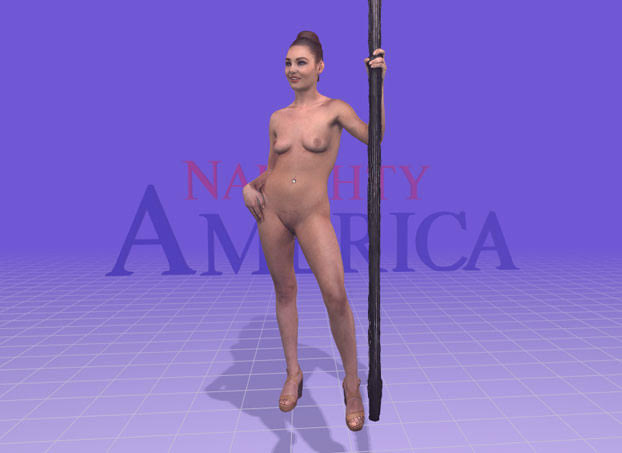
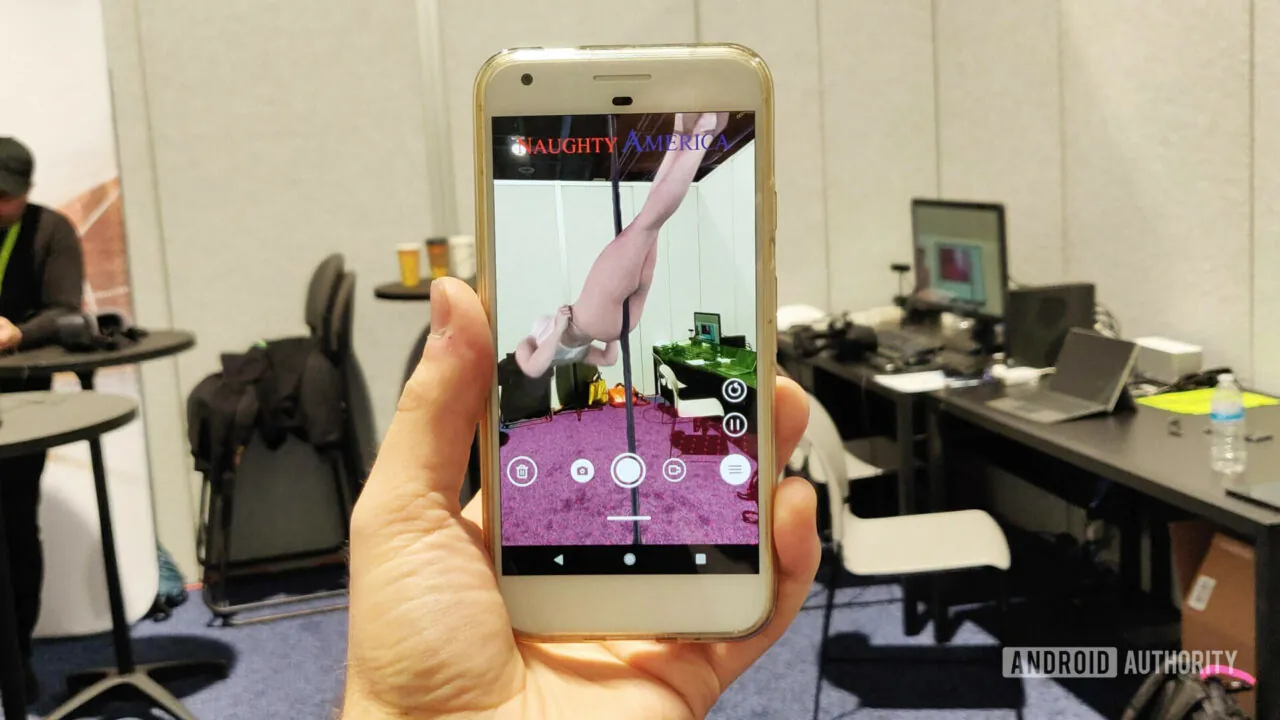
A major leap forward came when began demonstrating volumetric AR concepts at CES 2019. Instead of flat overlays, these demos used depth-aware capture techniques to create realistic spatial loops that users could place anywhere in their room.
Over the next few years, the concept evolved into dedicated mixed-reality viewing platforms such as RealGirlsNow.com designed for standalone headsets like the Quest Pro. The transition from phone-based AR to headset passthrough viewing made the experience feel significantly more natural and immersive.
This period helped bridge the gap between experimental mobile demos and modern mixed-reality ecosystems.
2023-2026: Passthrough AR Porn and 6DOF Experiences
Those trailblazing AR porn ventures laid the sexy groundwork for the sophisticated passthrough features and six-degrees-of-freedom thrills we’re indulging in now. Sites like BraindanceVR are serving up incredibly lifelike volumetric adventures where you can wander at will, getting intimately close, circling around the talent, or delving into settings as though you’ve stepped right inside.
BraindanceVR harnesses a whopping 165 coordinated cameras along with futuristic methods like Gaussian Splatting and Neural Radiance Fields (NeRFs) to digitize genuine adult entertainers into breathtakingly detailed, all-encompassing volumetric realms. This tech pinnacle caps off more than ten years of AR porn progress—from rudimentary webcam setups to deeply engaging six degrees of freedom (6DOF) fusions that intertwine flawlessly with your actual surroundings through passthrough magic.

Conclusion: The Evolution of AR Porn (2010-2026)
Looking back, the evolution of AR adult content feels less like a straight line and more like a series of creative experiments slowly converging into a real category. What began with simple webcam overlays and printed markers has grown into fully spatial experiences powered by volumetric capture and real-time rendering.
Each phase (print-triggered AR, mobile demos, early headset experiments, and modern passthrough systems) built on the last. As hardware continues improving and production workflows become more accessible, the line between digital and physical environments will likely continue to blur.
For an industry that has historically embraced new formats early, AR represents another step in that ongoing pattern. This time, the screen is no longer confined to a rectangle.
Last Updated: 2026/02/23 | Written by Scott Camball, creator of ARFreaks and WebXR developer.